Using AI as a structural co-pilot
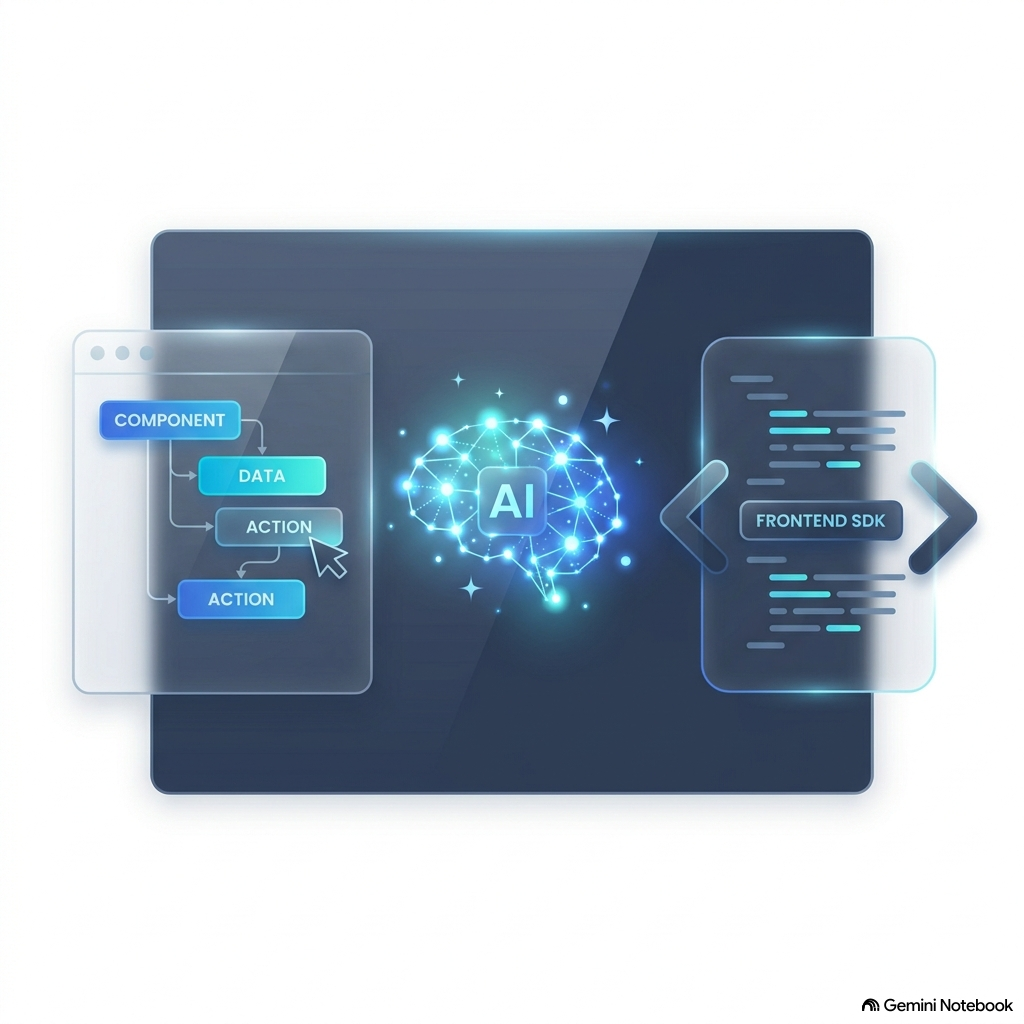
Where the human retains architectural oversight while the machine handles the code-writing heavy lifting—offers the opportunity for some fundamental engineering insights into this execution model.
Time-based ROI
The first point concerns delivery speed. By delegating repetitive, routine coding tasks to AI you are able to focus exclusively on critical architectural challenges.
This approach allowed for a dramatic compression of timelines, completing workflows in weeks that would typically drag on through endless sprints:
A functional Sandbox: A complete, orchestrated Docker stack ready to go.
Integrations: Full-CRUD workflows successfully completed and tested in production against real vendors, featuring runtime schema auto-discovery.
Reversing Technical Debt: "Hardened by Default"
Typically, projects developed at breakneck speed accumulate massive technical and security debt. Security patches and regression testing are historically left for last—often ignored for months after launch.
This is where human guidance of the AI makes the difference. By automating the routine work, you gain the mental bandwidth to design security into the system's native structure from day one.
Proof of this includes:
Zero-Round-Trip patch, which sanitizes administrative responses at the network level before they even reach the browser.
Automated Security Test Suite, featuring over hundreds of parametric test cases and a critical Route Drift Test. AI enables to write a massive volume of tests in just a few days, transforming security into a measurable asset well before the public launch.
Agility in Architectural Pivoting
A study case: a project plan called for mobile development using Progressive Web Apps (PWAs). During development, an opportunity arose to pivot to a native generator based on Capacitor, thereby eliminating iOS limitations and ensuring true hardware access.
In a traditional team, such a mid-development pivot would mean months of rewriting contracts and friction between frontend and backend teams.
Using AI guided by an architect allowed for an instantaneous pivot: it simply requires recalibrating the visual compiler to output for the Capacitor template, while keeping the core data model intact and consistent.
Validation of the Thesis (Empirical Evidence)
In our thesis, that enterprise IT companies make a mistake by using AI opportunistically to replace senior staff with junior staff in order to cut costs, as this destroys strategic vision and accumulates technical debt. Instead, AI should be leveraged by Level 2 professionals or Architects to create innovative solutions and gain a competitive advantage before the market becomes saturated.
Whoobe’s current state serves as a real-world proof of this thesis. A single IT Architect—leveraging AI to automate code generation while overseeing the architecture (Zero-Trust, Postgres JSONB, Federated Gateway, Capacitor Factory)—delivered a platform in just three months that surpasses the core offerings of long-established market competitors in terms of comprehensiveness.