Why We Chose Postgres JSONB Over Traditional EAV Models to Build an Enterprise PIM
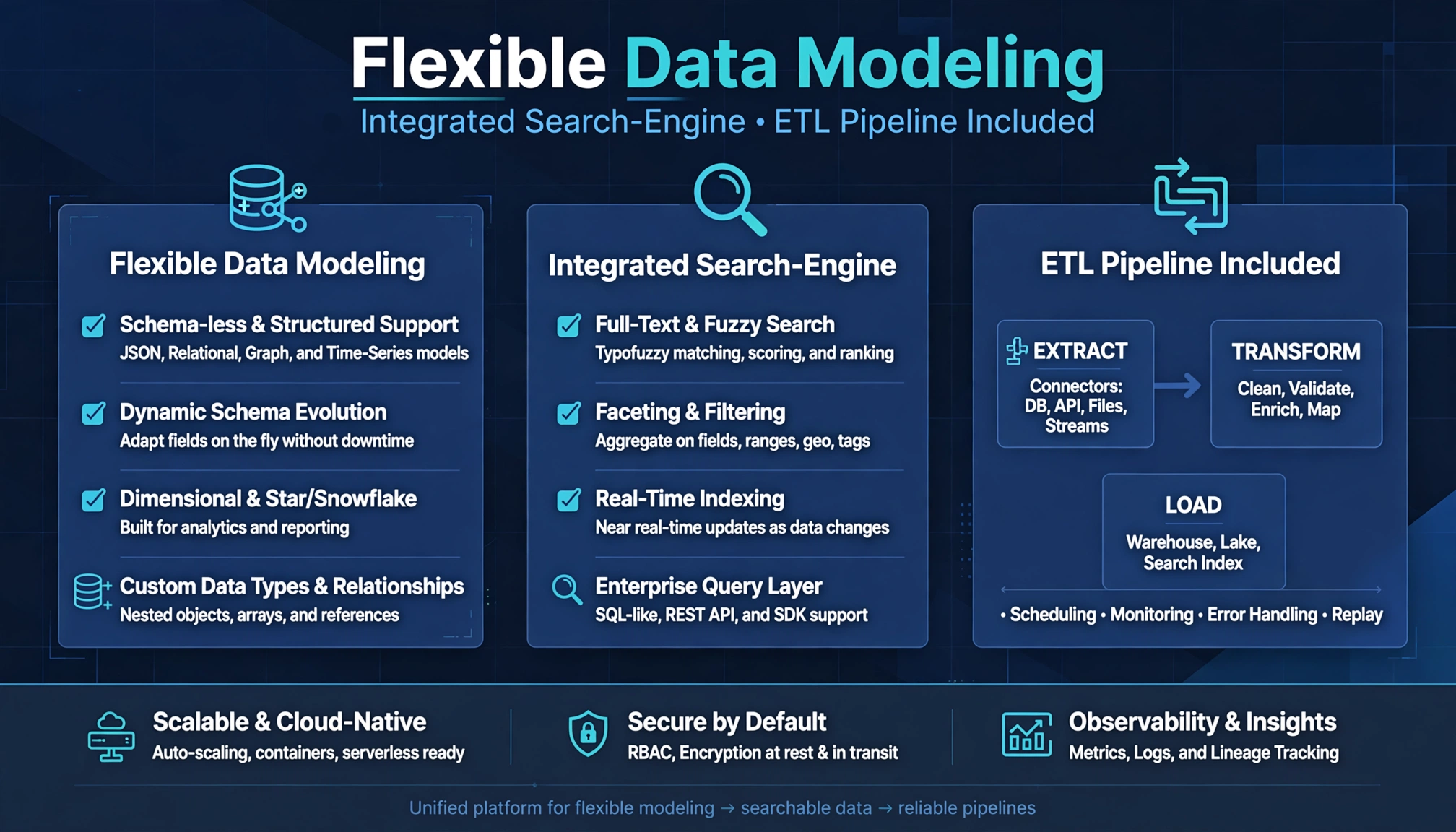
A deep dive into engineering a high-performance Product Information Manager (PIM) using PostgreSQL JSONB and Zod validation, leaving database bloat behind.
Building a Product Information Manager (PIM) or a Master Data Management (MDM) platform presents a classic database design paradox: how do you allow users to define arbitrary, deeply nested, multi-locale data classes at runtime without triggering catastrophic database anti-patterns?
For years, enterprise platforms like Pimcore or Magento forced developers into two distinct corners:
Dynamic SQL DDL Migrations: Executing raw ALTER TABLE commands at runtime every time a content manager adds a field in the UI. This introduces schema instability, dangerous locks, and architectural fragility.
The EAV (Entity-Attribute-Value) Model: Splitting data across static vertical rows entity_id, attribute_id, value). While flexible, EAV completely destroys database performance, turning a simple product query into an unmaintainable nightmare of 15+ SQL LEFT JOIN operations.
When we engineered the core architecture of our platform, Whoobe, we rejected both legacy approaches. Instead, we built an enterprise-grade PIM engine leveraging a modern hybrid stack: PostgreSQL 16 JSONB columns + runtime Zod schema validation.
Here is a deep dive into why this pattern outperforms traditional data modeling and how we implemented it.
The Architecture: Moving Schema Enforcement to the Application Layer
Instead of letting the database manage structural constraints through rigid SQL schemas, Whoobe decouples storage from validation.
- The Storage Layer: Postgres does what it does best—storing schemaless, highly optimized binary JSON blocks JSONB).
- The Validation Layer: TypeScript and Zod handle structure, relations, and type safety before any read or write event occurs.
When a user designs a custom "Data Class" (e.g., an industrial hardware item with multi-locale fields, dimensions, selects, and asset relations) through the admin UI, Whoobe saves that configuration as a declarative JSON schema.
// Whoobe runtime engine compiles the UI definition into an executable Zod contract
const EnterpriseProductSchema = z.object({
  sku: z.string(),
  locales: z.record(
    z.string(), // Language code (en, it, tr)
    z.object({
      name: z.string(),
      description: z.string(),
      specifications: z.record(z.string(), z.any()) // Dynamic field collections
    })
  ),
  logistics: z.object({
    total_stock: z.number(),
    warehouses: z.array(z.object({ id: z.string(), available: z.number() }))
  })
});
When an object is saved, the API pipeline parses the document against this compiled schema. If it passes validation, it is written as a single record into a Postgres JSONB field. No migrations, zero database locks, absolute structural integrity.
Performance at Scale: GIN Indexes vs EAV Joins
The historical argument against storing document strings in a relational database is index traversal speed. However, Postgres JSONB is stored in a decomposed binary format, allowing for massive indexing capabilities that put EAV to shame.
To guarantee blazing-fast search speeds over complex dynamic attributes, we leverage GIN (Generalized Inverted Index) indexing directly on the attributes block.
-- Creating a GIN index on our primary data objects table
CREATE INDEX idx_objects_data_gin ON whoobe_data_objects USING gin (data_attributes);
This single index allows Postgres to efficiently traverse deeply nested objects. A query looking for items where a specific nested warehouse has available stock compiles down to a clean, single-stage execution path:
-- Fast JSONB containment operator lookup
SELECT FROM whoobe_data_objects
WHERE data_attributes @> '{"logistics": {"warehouses": [{"id": "WH-MILANO"}]}}';
In an EAV database, this exact same lookup requires joining the entities table against the attributes catalog, joining again against the values_int or values_varchar table, filtering, and aggregating. GIN-indexed JSONB executes in a fraction of a millisecond, completely bypassing relational fragmentation.
Breaking the Search Cluster Dependency
In typical headless architectures, developers are forced to provision and synchronize separate external search clusters (like Elasticsearch or Meilisearch) because basic database queries cannot handle typo-tolerance or fast lookups across dynamic content. This introduces complex synchronization workers, data latency, and significant hosting bloat.
By centralizing everything on Postgres, we handle advanced text search at zero extra cost using two built-in modules:
- tsvector + tsquery: For strict Full-Text Search indexing across JSONB-extracted text strings.
- pg_trgm (Trigram Indexes): To support lightning-fast typo-tolerance, fuzzy searching, and type-ahead auto-completion directly on the dynamic attributes.
-- Enabling trigram capabilities on dynamic text keys
CREATE INDEX idx_objects_name_trgm ON whoobe_data_objects USING gin ((data_attributes->>'name') gin_trgm_ops);
The Engineering Verdict
Moving from an EAV or dynamic DDL migration mindset to an application-validated JSONB structure has rewritten our product delivery roadmap.
By unifying data structure management under a single PostgreSQL + TypeScript paradigm, we achieved:
- -95% Reduction in Database Complexity: No dynamic tables or join explosions.
- Instant Runtime Updates: Content teams can add fields or change sub-schemas instantly with zero IT intervention or downtime.
- Streamlined Infrastructure: No external caching layers or dedicated search servers to maintain.
If you are still building complex enterprise data platforms by treating your relational database as a static spreadsheet, it is time to unleash the binary power of JSONB.